By Isabel Padalecki ’22 and Caroline Green ’23
Gender, sex, and sexuality are often overlooked in the historical memory of the Holocaust. Though it is well-documented that homosexual men and women suffered unique forms of sexualized violence and played unique roles within World War II and the Holocaust, these issues are rarely discussed within the broader context of Holocaust historical memory.
After the war, as survivor narratives started to circulate and public knowledge of the atrocities of the Holocaust increased, fewer narratives about homosexual survivors and women who engaged in sex work circulated, especially in comparison to groups like Jews or political prisoners. Beyond the obvious – that there were few survivors to tell their stories because so many were killed – homosexuals and women who engaged in sexual barter in ghettos or prostitution within Nazi-created brothels felt shame to come forward about their experiences.
This is because they entered a post-war Germany of continued discrimination, a society that recognized them as deviant even beyond Nazi policy and failed to allow them to claim the oppression they experienced. For example, the same anti-gay legislation that was upheld by the Nazi party (Paragraph 175) remained intact in Germany until the late 1960s, and homosexuals were not recognized as survivors of Nazi strife even within the Nuremberg trials, which sought to hold the Nazi party responsible for the full range of crimes against humanity they committed.
For straight mothers, however, sexuality was sometimes reclaimed in a more positive light in the postwar. After the Holocaust, Jews in displaced persons (DP) camps used sex as a way to continue the legacy of their people. A Jewish baby boom occurred in the DP camps, and along with it came a whole new generation of Jewish people. This was seen as an act of defiance against Hitler, as Jews proved their refusal to be obliterated by the Nazi party. Even so, this part of history is largely ignored. By delving deeper into the intricacies and problems with the intertwined histories of sexuality and the Holocaust, we can illuminate, acknowledge, and pay our respects to the sexual violence and power claimed, experienced, and crafted within the historical moment of World War II and the Holocaust.
By telling these stories of sexual violence and sexual agency, we can reveal the sexualized undertones of Nazi eugenic policy and amend the historical erasures enacted against these folks who entered a post-Holocaust world of continuing criminalization and denial.
Homosexuality
Nazis began police confiscations of homosexual written materials once Hitler took power in 1933, but the Nazi party’s anti-homosexual stance was truly consolidated after the murder of homosexual Nazi leader Ernst Roehm. Roehm was the leader of the SA, and therefore a very powerful figure within the Nazi party. Fearing any loss of power within the Nazi party and increasingly suspicious of Roehm’s desire for such power, Hitler ordered the mass execution Roehm and his supporters in a 1934 massacre known as the Night of the Long Knives, blaming Roehm’s homosexuality for the his own murder after the fact.
From this point onwards, the Nazi messaging on homosexuality was “terrifyingly clear” (Whisnant); homosexuality was a problem that needed to be dealt with by the Nazi party to preserve Germany. Paragraph 175, the existing legal basis for criminalizing homosexuality in Germany, was extended to include even the insinuation of homosexual intent as a punishable crime, mass arrests and raids targetted suspected homosexuals, and homosexuals were condemned to hard forced labor, sexual violence, medical experimentation, and death in concentration camps. Although these measures applied to homosexuals broadly, they primarily targeted gay men.
The leader of the SS, Heinrich Himmler, was perhaps the most important figure in crafting and disseminating the message that homosexuality was antithetical to the health of the German state, and therefore deserving of violent punishment. The language used by Himmler reveals that, throughout World War II, the Nazi party considered homosexual men to be a pathogenic and reproductive threat to Germany and the Aryan race. In a speech delivered to high-ranking SS members in February 1937, Himmler stated the following about homosexuality as a broad issue:
All things which take place in the sexual sphere…signify the life and death of the nation…the people which has many children has the candidature for world power and world domination. A people of good race which has too few children has a one-way ticket to the grave…if we continue to have this burden in Germany, without being able to fight it, then that is the end of Germany, and the end of the Germanic world.
Himmler thus defines homosexuality as a primary enemy of Germany; by failing to engage in heterosexual, reproductive sex and produce German children, homosexuals were seen as contributing to the obliteration of the German nation as a whole. Himmler further presents homosexuality as a potentially contagious biological threat in need of containment by describing individual homosexuals as “cases,” referring to them using the language of infection. He ends his speech by insisting that the murder of homosexuals (both prior to the construction of and within concentration camps) would cultivate “increasingly healthy blood” for Germany, extending the logics of pathogenic, biological contamination and racial eugenics used to justify the murder of Jews and Roma people, among others, to the broad class of homosexual men.
This biological condemnation of homosexuals and the imperative assigned to their extermination underlies their experiences within concentration camps. Though the number of homosexuals imprisoned in concentration camps is smaller than other demographics, their death rate was about three to four times higher than other prisoners who were neither Jewish nor Romani.
Stories of survivors are the primary means by which we can learn about the experiences of those who managed to survive camp imprisonment; for example, in The Men With the Pink Triangle, Heinz Heger discusses the experiences of homosexuals by telling his friend Josef Kohout’s experiences of the concentration camp. Heger’s descriptions of “Commander Dustbag,” named for his obsession with punishing homosexuals upon obsessively searching for dust in their barracks, exemplifies the humiliation and surveillance imposed on homosexuals. Dustbag is described as replacing the pink triangles worn by homosexuals (shown below) with especially large triangle emblems, seeking opportunities to punish homosexual prisoners by watching them as they slept in hopes they would engage in disallowed sexual conduct, and even watching through a small hole as homosexual prisoners were forced to have sex with female sex workers in camp brothels as a “cure” for homosexuality.

Though sexualized humiliation was experienced by many camp prisoners through actions such as forced nudity, experiences like these demonstrate that this humiliating and invasive sexual violence was uniquely imposed upon homosexual prisoners. This humiliation was compounded by social isolation imposed on homosexual prisoners; they were often prohibited from speaking to other prisoners, were disallowed physical contact on account of their supposed sexual immorality, and were looked down upon by fellow prisoners as the “lowest caste in the concentration camp” (Heger).
Outside of humiliation and surveillance, homosexual camp prisoners were subjected to unique forms of physical and sexualized violence. As previously mentioned, the notion that homosexuals needed to, and potentially could be, “cured” ended up harming many homosexual prisoners; according to Heger, they were forced to have sex with women in brothels against their will. Further, because their bodies were seen as reproductively defective, they were “prioritized for medical experiments, [which] usually ended in death” (Heger).
Starting in 1943, homosexuals were coerced into castration, which clearly reflects the Nazi belief in their reproductive deficiency; they were promised freedom upon electing to become castrated or “cured,” but were actually sent to an SS penal division on the Russian front after castration, where they would most likely die. Finally, even if they avoided medical experimentation and sexualized violence, they were subjected to some of the hardest labor within concentration camps, such that many literally died of overwork. By considering stories like these, we can clearly see that despite the lack of space allotted to them within the historical memory of the Holocaust, homosexuals suffered uniquely and profoundly under Nazi regimes.
Sexual Barter and Violence
Perhaps one of the most overlooked aspects of the Holocaust is the presence of sexual barter, which primarily took place in the ghetto setting but occasionally occurred within concentration camps as well. In Sexual Barter in Times of Genocide, historian Anna Hájková analyzes the Theresienstadt ghetto to describe a system of sexual barter that was both gendered and classed: typically, women with lower class status or limited access to resources would exchange sexual acts or favors with men who had access to resources or wealth, or belonged to a more valued national group within Nazi racial logic. Harder manual labor was rewarded with higher food rations, but was usually allotted to male prisoners; for this reason, women were more likely to have low class status in the ghetto. Because resources such as food, space, and medication were so severely lacking in Nazi ghettos, feminine sexuality was one of few resources many women imprisoned in ghettos had access to in order to support themselves and their family members who depended on them.
This kind of system is evident in narratives of people who lived in ghettos; for example, in a document preserved by the Oyneg Shabes underground archive of the Warsaw ghetto, a Polish-Jewish journalist describes the life of Mrs. G, a Jewish woman who worked as a “waitress” (a description that often implied sexual barter as well as literal waitressing). As argued by Hájková, Mrs. G finds agency in her participation within this sexual economy. Mrs. G lived along the border between the ghetto and the Aryan side of Warsaw and developed sexual relationships at the restaurant for which she waitressed, exchanging sexual acts for access to money and resources.
Living under conditions of scarcity, sex work allowed her to support her family materially; she is described as becoming “intoxicated with this erotic gambling [which]…gave her broad means to help her family” (USHMM).
Mrs. G, and others like her, mobilized the sexual desires of men with more power in the local area to derive power from her femininity, despite that her womanhood likely partially deprived her of resources in the first place. Though women like Mrs. G did not consent to living in a ghetto and were subjected to deprivation and isolation, Hájková urges us to view sexual barter in a way that imbues these sex workers with historical agency: as an avenue through which women mobilized femininity to access means of survival in a setting where space and food were limited by the Nazi party.
This story of relative agency is not, however, the only narrative of sexuality within the Holocaust; many women and homosexual men were made victims of sexual violence inflicted by the Nazi party. Notably, there was no directive from the Nazi party that officers engage in sexual violence within campaigns of terror. In fact, it was ideologically discouraged by the Nazi party; the policy of Rassenschande condemned sexual activities with members of “inferior races” (notably, Jewish women) for fear of racial contamination of the men and any offspring formed by such an encounter.
Despite this policy, many Nazi officers engaged in frequent acts of sexual aggression against women and some homosexual men without receiving punishment from Nazi superiors; many murdered their victims afterwards to avoid culpability or shame (especially in cases of homosexual rape). As Nazi death squads invaded Eastern territories and turned cities and towns into sites of war, many women were randomly raped by Nazis as part of their campaign of violence and terror. When Jewish homes were looted, Nazi officers often engaged in acts of sexual aggression, raping Jewish women that they discovered within these homes and deporting women from these areas and from ghettos to perform forced sexual labor in Nazi established brothels in concentration camps.
Within camps themselves, sexual violence was used as a tool of physical violation and humiliation against primarily female prisoners. According to historian Waitman Wade Beorn:
camps seem to be a space where sadism, boredom, and absolute control combined to create an environment in which all kinds of sexual and sexualized violence could escalate
Beorn, p. 210
Instances of this violence can be found in survivor narratives; for example, Holocaust survivor Dora Goldstein Roth tells a story of mass rape during her time imprisoned at the Stutthoff concentration camp. There, several women attempted to escape the camp; however, they were eventually caught and raped by camp guards in front of all of the other female prisoners. These female prisoners were also forced to stand naked in the cold for hours as collective punishment. This story is just one of many relayed by Roth in her oral history interview published by the United States Holocaust Memorial Museum; unfortunately, her experiences with rape and sexual humiliation were not unique for women imprisoned in Nazi concentration camps.
Roth’s story reveals the uniquely gendered nature of sexual violence in the Holocaust; women were the primary victims and men the primary perpetrators, making this an assertion of power and humiliation that affirmed a patriarchal arrangement of power and violence. While on the surface, Nazi ideology discouraged engaging in sexual acts with women of “inferior races” held within concentration camps, sexual violence was nonetheless a major part of the violence of the Holocaust. That the Nazi party allowed this sexual violence to occur frequently despite its conflicts with Rassenschande policy and notions of racial purity demonstrates the deeply patriarchal foundations of Nazism and the individuals who decided to carry out sexual assault from their positions of power in concentration camps.
Overall, examining the stories of victims of Nazi persecution who were involved in sexual violence and sexual barter demonstrates the relevance of gender as a location of power and privilege that shaped the experience of violence for those who were condemned by the Nazi party. These systems therefore call into question analyses of the Holocaust that avoid discussion of gender as an important locus of social power under the reign of the Nazi party.
DP Camps, Sexuality, and “Normal Life”
After the end of World War II, the Nazi concentration camps described above were either liberated or destroyed. Many Jewish survivors were left without a home, family, or sense of identity. The issue of migration for Jews became a large problem. In particular, displaced persons, also known as DPs, struggled as they attempted to return to their homelands or migrate elsewhere. Oftentimes, DPs did not want to return to their country of origin as it was difficult to live in a place that was “directly associated with the memories of murdered family members and friends” (Ouzan, 2). Additionally, sometimes returning home was not even possible as their homes were decimated from the war.
In response to the crisis of displacement, Allied forces “constructed temporary homes for…Jews in the form of displaced persons (DP) camps, often established in former Nazi concentration, prison, labor, and military camps” (Kramen). These DP camps were located in the occupied zones of Germany, Austria, and Italy, and were created to provide space and survival resources for the large population of DPs in Europe, which peaked at nearly 250,000 in 1947.
There is nothing to be cheerful about here, and I do not want to write to you in too much detail, because you will not get enjoyment from any of it.
Szyja Faktor to Relatives in the United states on the DP Camps
Unfortunately, life in the DP camps was not much different from a concentration camp; DPs considered themselves to be “liberated but not free.” DPs in these camps suffered from “inadequate amounts of food….shortages of clothing, medicine, and supplies” (Yad Vashem). In a letter from Szyja Faktor to his relatives in the United States, Faktor describes his poor living conditions in the Rivoli DP camp in postwar Italy. The Rivoli DP camp was frequented regularly by European Jews given its proximity to Palestine. Consequently, the camp had a considerably large population; in 1948, the Rivoli DP camp was temporarily home to approximately 1,650 Jewish refugees. In Faktor’s 1948 letter, he describes that the United Nations Relief and Rehabilitation Administration “had no skill whatsoever in maintaining so many [people], the food was [then] reduced by 45%, so things are not so good, and on top of that, my wife is not well.” Faktor also wrote of his low morale, relaying that “there is nothing to be cheerful about here, and I do not want to write to you in too much detail, because you will not get enjoyment from any of it.”
Yet, despite these poor living conditions, especially in the beginning stages of the DP camps, they eventually became “centers of social, cultural and educational activity.” According to researcher Hagit Lavsky, “the camps were a model for the incremental move from a bruised and battered Europe to a new life — in Israel and America” (Yad Vashem). Though many DPs suffered within these camps, they represented a transitional space in the process of actual liberation.
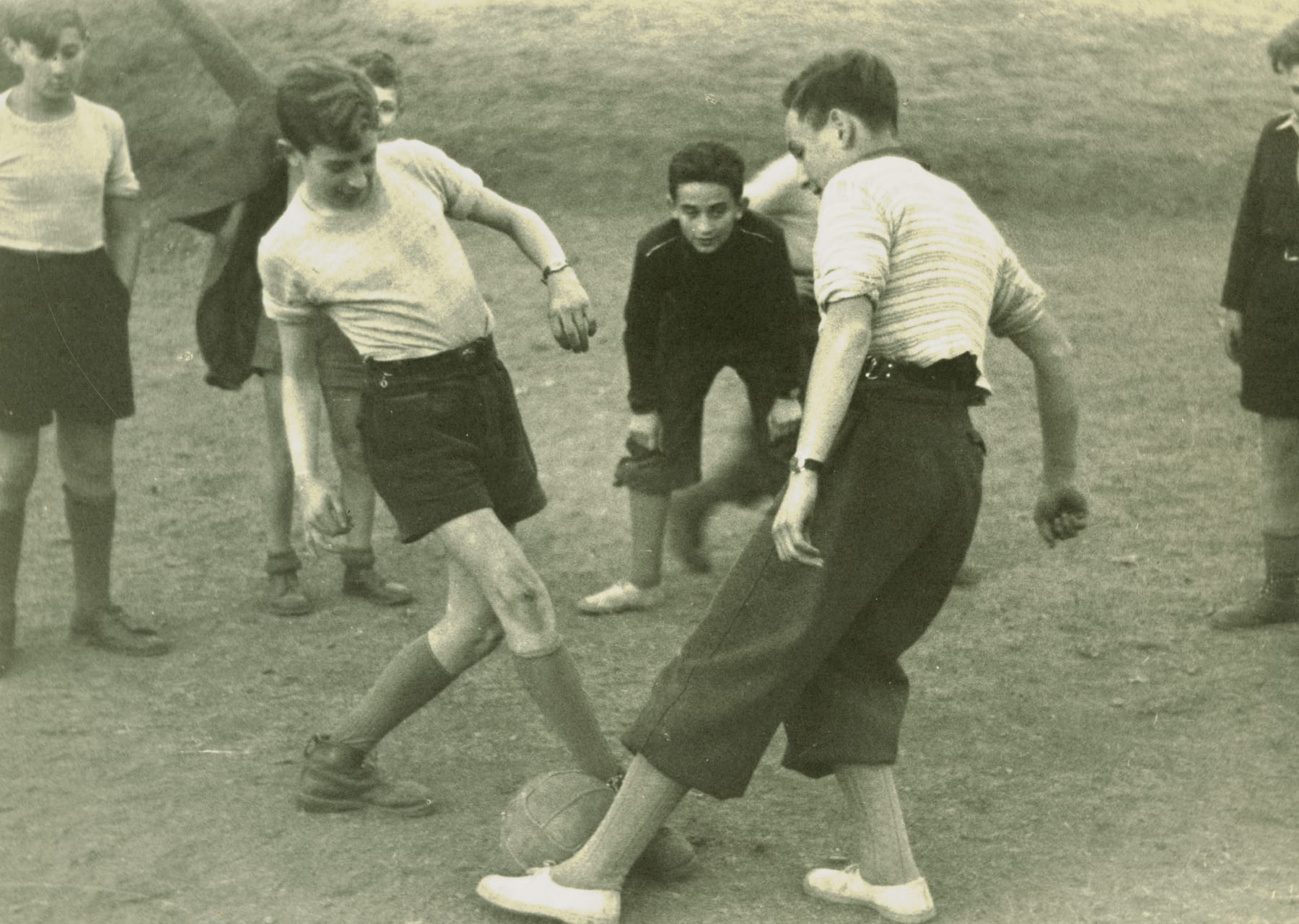
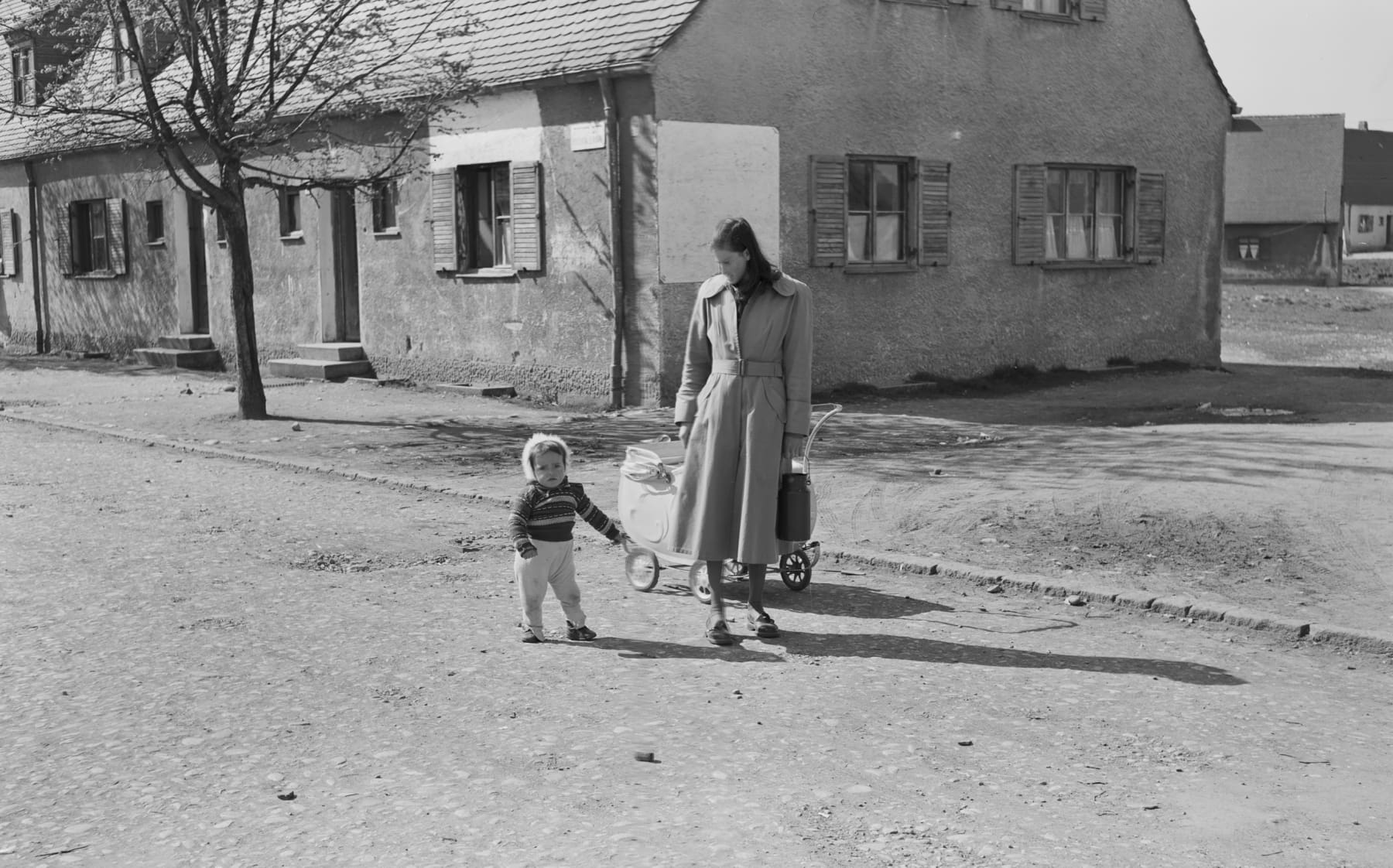
Women played an important, yet greatly underreported, role in continuing Jewish life and culture into the DP camps; this is especially evident when their role in bearing and raising children is considered. In January 1946, there were 120 children under the age of five in the American-occupied zone in Germany. By September 1946, only eight months later, this number had skyrocketed up to 4,430. By the beginning of 1947, the birth rate within DP camps reached 50.2 per thousand (Schein).
Given these significant increases in the number of children in such a short period of time and an extremely high birth rate, it is clear that a baby boom occurred in the DP camps. In the context of displacement and DP camps, in which resources were severely limited, starting a family was a great risk for Jewish people. In fact, given the unstable and weak German economy at the end of World War II, Germans often discouraged procreation for all members of society, even those who were non-Jewish and relatively privileged. The Jewish folks in DP camps, however, did the exact opposite, indicating that there were more important and meaningful motivators behind this Jewish baby boom.
The Jewish baby boom that followed the termination of World War II represented Jewish couples’ strong desire to preserve and perpetuate Jewish religion and culture by giving birth to more Jews. The increase in the physical presence of Jews in Europe as a result of the baby boom was seen as a great act of defiance against the Nazis, who had attempted to obliterate them altogether. More specifically, “Jewish births represented the new beginning of Jewish society in freedom and the triumph of the Jewish people over their oppressors” (Feinstein, 73).
Even beyond motherhood, Jewish women were not absent from public life in DP camps. Some Jewish women chose not to have children, and others maintained political activity or employment in addition to caring for their families. The demands of pregnancy, the demands of raising a family, and the stress of enduring life in the DP camps even without children to care for was a great obstacle that many Jewish women overcame during this time, for the important task of preserving and perpetuating Jewish society and culture. Through their courageous and challenging acts are often neglected, we must recognize the labor of strength, courage, and love enacted by Jewish mothers in DP camps, and therefore the important role of gender, sexuality, and reproduction within World War II and the Holocaust.
For Further Reading
- Beorn, Waitman Wade. “Bodily Conquest: Sexual Violence in the Nazi East.” In Mass Violence in Nazi Occupied Europe, edited by Alex J. Kay and David Stahel, 195-217. Bloomington: Indiana University Press, 2018.
- “Displaced Persons Camps.” Yad Vashem, 2020.
- Faktor, Szyja. Letter from Szyja Faktor to His Relatives. Washington, DC: US Holocaust Memorial Museum, August 6, 2002.
- Feinstein, Margarete Myers. “Jewish Women Survivors in the Displaced Persons Camps of Occupied Germany: Transmitters of the Past, Caretakers of the Present, and Builders of the Future.” Shofar 24, no. 4 (2006): 67-89.
- Grossman, Atina. Jews, Germans, Allies: Close Encounters in Occupied Germany. Princeton: Princeton University Press, 2009.
- Hájková, Anna. “Sexual Barter in Times of Genocide: Negotiating the Sexual Economy of the Theresienstadt Ghetto.” Signs: Journal of Women in Culture and Society 38, no. 3 (2013): 503-533.
- Heger, Heinz. The Men With the Pink Triangle: the True Life and Death Story of Homosexuals in the Nazi Death Camps. Los Angeles: Alyson Books, 1980.
- “Homosexuals and the Holocaust: Himmler’s Speech on the Question of Homosexuality, February 1937.” Jewish Virtual Library. Accessed October 20, 2020.
- Jewish Historical Institute (ZIH), Warsaw. “A Jewish Woman in Warsaw from September 1939 to the Present.” United States Holocaust Memorial Museum. Accessed October 20, 2020.
- Kramen, Alexandra M. “Indefinite Displacement: Post-Holocaust Jewish Refugee Experiences, Community, and Life in Displaced Persons Camp Föhrenwald, 1945–1957.” West Chester: West Chester University of Pennsylvania, 2015.
- Ouzan, Françoise and Manfred Gerstenfeld. Postwar Jewish Displacement and Rebirth: 1945-1967. Boston: Brill, 2016.
- Schein, Ada. “She’erit Ha-Peletah: Women In DP Camps In Germany.” Jewish Women’s Archive. Accessed October 27, 2020.
- “The Return to Life in the Displaced Persons Camps, 1945-1956.” Yad Vashem, 2020.
- “USHMM Oral History with Dora Goldstein Roth.” United States Holocaust Memorial Museum. Accessed October 20, 2020.
- Whisnant, Clayton John. Queer Identities and Politics: a History, 1880-1945. New York: Harrington Park Press, 2016.
