By Clare Gaffney ’21 and Elizabeth Brubaker ’23
Nazis were notorious for their secrecy, propaganda, euphemistic language, and destruction of written orders in the Holocaust. When historians search for what actually happened to the roughly 11 million victims of Nazi terror, they have to construct an understanding of these events from a collection of sources that were never meant to exist.
Today, historians use a wide variety of source types to help understand the complexity and diverse experiences of the Holocaust. In this section, we discuss official Nazi documentation, images and illicit documentation, music, diaries, memoirs, and oral history.
Each source type provides a different kind of insight and presents unique challenges. In addition to simply understanding the Nazi process of extermination, recovering and preserving these sources are vital to the Jewish community, whose possessions, places of worship, and dignity were annihilated. Finally, much of this documentation was done in secret. People risked their lives to record the Nazis’ crimes. When looking at these sources, we must understand that many of these people were unsure if they would live to tell about their experiences or observations; they were dedicated to postwar justice.
Official Documentation
The mass of racist documentation from the Third Reich shows how the Nazi regime tried to make discrimination as legal as possible, and laid groundwork over the course of a decade to make mass extermination a reality. For example, in 1935, the Third Reich passed the Nuremberg Laws to prohibit marriage or sexual relations between Jews and non-Jews. An important factor to note is that the Jewish religion itself was not persecuted; Nazis viewed their own Aryan race as ‘superior’ to those of the ‘Jewish’ race.

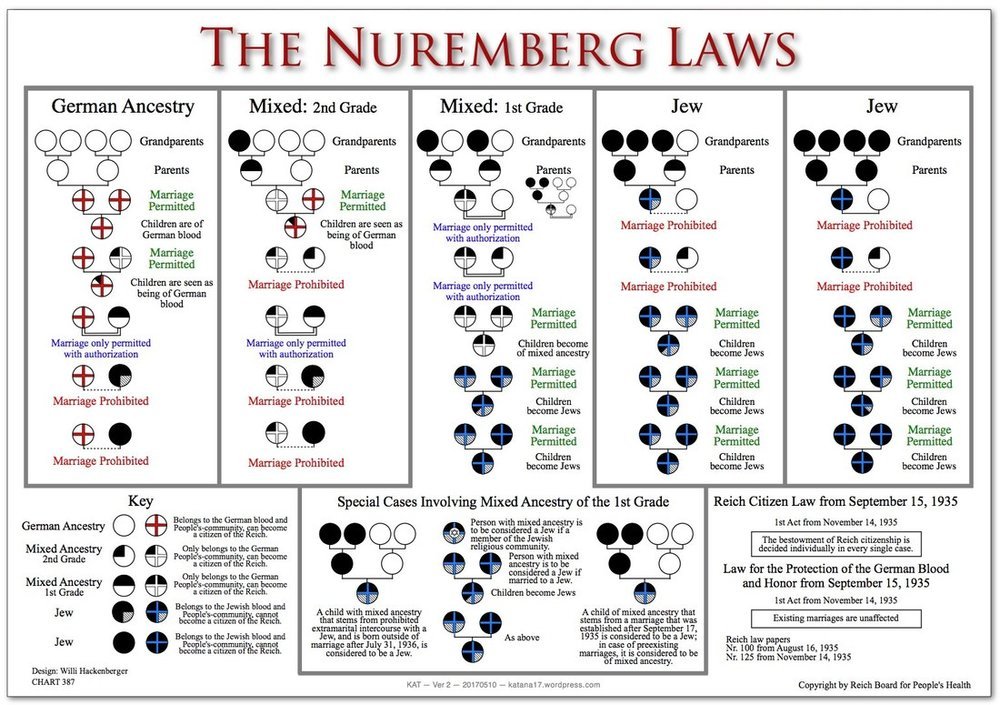
The Nazi regime’s definition of non-Aryan or simply ‘undesirable’ people included Romani people, homosexuals, and political dissidents. At the same time, much of the language used to persecute Jews was done in a very euphemistic manner in order to cover the inherent persecution and extermination of the Jewish race. We can see this in Heinrich Himmler’s order for the Liquidation of the ghettos in Ostland.
Heinrich Himmler was one of the highest-ranking officers in the Nazi party. He established the first concentration camp, Dachau, rose to power in the SS, and deployed the Einsatzgruppen, the mobile paramilitary death squad. The majority of Himmler’s orders to lower-ranking Nazis used euphemistic terms. For example, many ghettos were ordered to be ‘liquidated,’ which meant every inhabitant was to be sent to their deaths. Within Himmler’s order for the Liquidation of the Ghettos in Ostland, it is only stated that “inmates who are not required will be evacuated to the East.” This actually meant deportation, primarily to death camps like Treblinka and Sobibór. This document, although very nondescript, was one of the most direct communications from the Nazis calling for the extermination of Jews.

Much of the information higher-ranking officers held was not distributed. Hitler himself rarely documented his own orders, relying instead on oral command. This lack of physical documentation on the part of the Nazis was extremely purposeful; it left little evidence for which high ranking Nazi officials could be persecuted, although eventually some were in the Nuremberg Trials.
It should be noted that the Nazis relied heavily on propaganda in order to keep the German citizens from knowing the actual crimes of the Third Reich. The average German citizen was aware that the Nazis disliked Jews, and that their newspapers were unfailingly pro-Nazi, but they could not have known how many Jews and others were being persecuted and murdered across Europe. So while official documentation may be minimal, there is no shortage of propaganda meant to convince the German people that the Nazis were protecting them from various threats to Aryan power, such as the Bolsheviks or even the Jews themselves.
One such example of propaganda against Jews is the film “Der ewige Jude,” or “The Eternal Jew,” directed by Fritz Hippler in 1940. The film claims to be a documentary, as it shows actual footage from ghettos in Poland, yet it makes clearly biased and unfounded claims against Jews, accusing them of being cultural parasites obsessed with money and domination. As this propaganda film was in fact made by Nazis, it does not provide any accurate historical information; it only shows how prevalent anti-semitism was in Germany in the early 1940s, and how the average German citizen could only see slivers of the actual Nazi atrocities.
An event which provides insight into Nazi discrimination against Jews was the 1936 Olympics which were held in Berlin, Germany. Most explicit signs alluding to anti-semitism of the Nazi party were removed as visitors from all over the world would be arriving and Hitler’s Germany would be under an intense global microscope. However, the Nazi swastika flags were on full display, despite the pressure to hide their militant anti-semitic policies, and spectators noticed the dominant presence of the Nazi military force. In April of 1933, in preparation for the 1936 Olympics, the Nazis’ sports office ordered that all public athletic organizations need to implement an “Aryans-only” policy.
Images and Illicit Documentation
The adage “a picture is worth a thousand words” can certainly be applied to photographic documentation of the Holocaust. Images taken within the confines of concentration camps are relatively limited but are able to illustrate and reiterate the testimonies of many victims in a way that words cannot do justice. When victims arrived by train to Nazi camps they were stripped of all personal possessions in an effort to both dehumanize and silence these prisoners. As a result, photo documentation from inside concentration camps and from the perspective of victims is an extreme rarity that has been extensively studied and theorized over. Images from the vantage point of the perpetrators of these crimes however is more common. When looking at perpetrator images, it is important to remember the intention behind the photos and how this influences the subject matter. Although none of these images document the crematoriums or the act of exterminating prisoners, they offer a glimpse into these camps that informs and reinforces our understanding of these institutions.
The article “Four Pieces of Film Snatched from Hell” shows the only known photographs of gas chambers in a concentration camp. These pictures were taken in Auschwitz, the most famous concentration camp, during its operation from the viewpoint of a victim. The photographer was a Sonderkommando, a Jew who was forcibly tasked with burning and burying other Jews. He managed to photograph Nazis burying the remains of Jews outside a crematorium. The process that the photographer went through to take these photos required much ingenuity and courage; the film had to be hidden under the man’s shirt, and the camera had to be hidden at all times. Taking these photos out of the camp required collaboration with the polish resistance, and they were snuck out in a tube of toothpaste. As all ghettos and concentration camps were destroyed following Hitler’s death and the Nazi defeat, many details of the victims’ lives and suffering were lost.
The Ringelblum Archive, or the Oyneg Shabbos Archive, contains many secret documents from the Warsaw ghetto. A group of people within this ghetto decided to document their experience despite knowing they would be killed if the Nazis found their work. They dedicated themselves to chronicling daily life in the terribly overcrowded ghetto, interviewing other Jewish people, and, most importantly, staying undiscovered. In 1943, it was becoming increasingly clear that the ghetto was soon to be ‘liquidated,’ or that all of the people inside were going to be sent to Treblinka, a death camp. All of the documents, essays, and photographs were buried in various containers. Only three members of this group survived after the war. Most of the documents have been recovered, and the name of the archives was dedicated to Emanuel Ringelblum, who led the group before and after his time at a concentration camp.

Another large contributor to the photographic documentation of the Holocaust was Henryk Ross who captured the experiences of Jews in the Łódź Ghetto in pictures. Ross served as the official photographer for the Łódź department of statistics over the period of 1940-1944. During this time Ross captured over 3,000 images of ghetto life he then buried the negatives in the ground so that this account had a chance of surviving Nazi destruction. Although being given the occupation of photographer the images Ross took went past his obligations as he intended to document the atrocities of Łódź. These photos have a strong contrast in tone, Ross captured both happy couples and babies playing along with dead bodies and starving families.
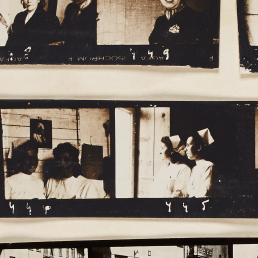
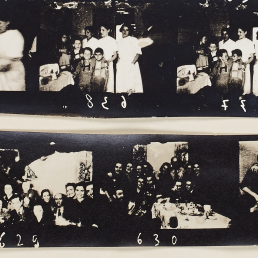
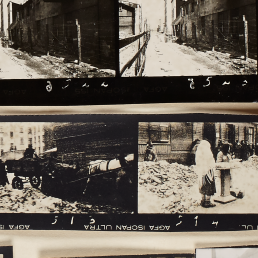
Although there is little photo documentation of the atrocities of the holocaust from the perspective of the victims, Nazi officers provide another vantage point into the camps. The photos taken by these officers often do not focus upon the tragedies of the victims but rather seem to boast of Nazi success.
Other images which exist in relation to the holocaust come much later on in the war after the camps have been liberated by Allied forces. These images are highly emotional as the prisoners documented are on the verge of death, with bones clearly visible and skin drawn tight. Although these pictures do not capture the active suffering of these victims it shows the toll that these camps took upon their bodies and the agony that they underwent for so long.
Music
A compelling and often overlooked aspect of Holocaust history is the music written during this time. Many Jewish people who had fled to Eastern Europe composed songs about their experiences. Some of the songs are violent and portray the hatred the Jewish people had toward Hitler, while some are mournful lullabies. The juxtaposition of words of fear, hatred, and violence with the often upbeat rhythm or tempo of the music is startling, and at times, incredible.
Autumn leaves with gold are softened
In us grow deep scars
And a mother, somewhere orphaned
Her child in Ponar
Hopelessness and the ever-present threat of death is a prevalent theme which pervades much of the music written during this time. Surprisingly another common thread among these songs is hope and the idea of Jewish resilience. As knowledge of the mass extermination became commonplace, so did the dismal attitude toward death and dying. As death began to be perceived among persecuted groups as an inevitable fate which they would all meet, songs began to speak to this theme in an attempt to comfort victims. Some songs, notably Shtiler Shtiler, were lullabies meant to calm children in spite of their horrific lyrics. “Autumn leaves with gold are softened/In us grow deep scars/And a mother, somewhere orphaned/Her child in Ponar” tells the audience of the horrific fate of the near 100,000 people that died in Ponary during the Holocaust, yet the tone is calm, and the title itself translates to “Quiet, Quiet,” indicating this song was meant for quieting children.
Sometimes, the music concerns the Jewish identity in general. Finding solace in another country instead of Germany or Poland gives the persecuted people a sense of community and national pride when their home country had essentially exiled them. One example of such a song is Kazakhstan, which tells of the sense of acceptance and relief that Jews felt upon arriving in this nation. Lyrics such as “Oh, you will be a beloved brother in our family” reassures the masses of Jewish migrants that they are not universally hated and instead are welcome and desired members of these communities.
It was a storm wind,
A storm wind
That brought me into Asia
And by now I’ve learned very well
Very well
That this land exists, [called] Kazakhstan, Kazakhstan
What a land it is
A land it is
Surrounded by mountains, like a wall
Like a wall
Mountains with craggy tips and peaks
Blanketed over with white snow
There, thunder and lightning crackle out
And angry winds swirl loose from [the peaks]
Some music written during the Holocaust such as Purim Gifts for Hitler acknowledges Jewish persecution throughout history, and urges people not to give up hope. They poke fun at the Jewish history of alienation and assert that soon Hitler and Nazi Germany will be added to the list of parties which tried to end the Jews: Haman, Antiochus, Torquemada, Krushevan. Creating music with humor and hope shows the resilience of the persecuted Jews, and leaves a lasting legacy after the Holocaust.
The Yiddish Glory website provides many songs, many of which are from the perspective of Stalin and Red Army supporters. This is a biased perspective and many songs speak to military endeavors, but fascinating and important history nonetheless.
Diaries
Diaries are crucial for helping the historian understand what people’s day to day lives were like before and after the Nazi’s racist and anti-semitic regime was in power. Many documents from victims of the Holocaust were written or recorded years after the experience. These memoirs were written with the perspective of someone who knows what the Nazis have done. But it’s essential to know that people living in the midst of the Holocaust were not always aware of the enormity of the event. In modern times we wonder how, in the late 1930s and early 1940s, people didn’t necessarily realize the extent of Nazis intentions of racial domination.
Many diaries were written during the Holocaust, and from several different perspectives. Unfortunately, many persecuted peoples (Jews, Roma, homosexuals, etc) were largely unable to provide diaries of their experiences under Nazi rule due to the circumstances of their living conditions. Concentration camps did not allow prisoners any personal belongings, especially any that would allow documentation of the Nazis’ crimes. As a result, to our knowledge the existence of diaries documenting experiences within the camps are severely limited.
Victor Klemperer, a Jewish university professor and intellectual, kept a diary from the years of 1933-1945. Klemperer’s diary begins at the beginning of the Third Reich and ends with him and his wife escaping their home in Germany. His diary is particularly interesting in that it shows the insidious progression of anti-semitism in Germany; at first, as a Jew, Klemperer faces very little oppression, but as time passes and more anti-Jewish policies are passed, he lives in fear, is forced to wear the yellow star, and relies on his wife (a non-Jew) to buy food. This diary is not just an account of Nazi persecution. It documents the weather, social interactions and financial difficulties much like any other diary would. Klemperer also notes his shame of his German identity, something he was once very proud of. As a result of the span of years which this diary documents we are able to see the progressive intensification of Jewish persecution through a first person account.
Memoirs
Memoirs of the Holocaust are very detailed and often less emotional than diaries. Survivors of concentration camps suffered greatly from the trauma they experienced or from survivor’s guilt, and so if they decide to recount their experiences, it can sometimes be detached. Writing after the events have already passed may also offer the writer the advantage of perspective. We may be able to gain a more nuanced understanding of how the Holocaust was experienced by looking at it through lenses that only time can provide.

A large amount of memoirs come from Auschwitz survivors. Auschwitz was an extremely large concentration camp, and a camp that has a high level of name recognition today. It is represented heavily in Holocaust memory as Auschwitz was actually liberated and was not destroyed like most other camps. Almost immediately after liberating this camp the Polish government worked to preserve this site, knowing the historical gravity of what took place here and seeing it as an important tool for education. Auschwitz had a survival rate of 15%, while around 0.01% of people sent to Treblinka, Chelmno, or Bełżec (three of the largest death camps) survived. A few million people were sent to extermination camps, yet we do not have proportional accounts of their experiences.
Primo Levi’s memoir, Survival in Auschwitz, is a prime example of this. Within this source Levi documents in detail his horrifying experiences in Auschwitz, emphasizing how he was able to survive. He talks about the intricate web of relationships within camps and how in order to survive one must go above and beyond simply existing. They must barter, sneak and work their way up to positions that offer benefits not granted to the average prisoner. As a skilled chemist Levi was able to increase his chances of survival by being selected by the nazis for a chemist position in a camp lab. This position gave him the benefits of a pair of underwear and admission to the infirmary when sick. As a result of this position Levi would not be moved to a death camp when deemed unfit for labor. This ultimately saved Levi’s life, when the Nazis abandoned the camp in 1945 Levi was in the infirmary and was considered too ill to march. He was left for dead but remarkably survived through collaboration with other sick prisoners.
So often Holocaust accounts can be stories of struggle, illness and death. Levi’s memoir shows us that this is certainly true; however, it also provides insight into a story of perseverance and grit that ultimately led to his survival.
Oral History
Individual testimonies can add invaluable information to Holocaust knowledge and contribute perspectives which are detailed and emotional in their delivery. It may often be difficult for survivors to share their accounts as some associate an immense amount of guilt with still being alive. Collecting these testimonies is extremely important as each individual offers a unique perspective which enriches our understanding of these events. Oral histories of Holocaust survivors has become a source of increased interest as the amount of individuals who survived these events have begun to dwindle due to old age. The United States Holocaust Memorial Museum has collected over 9,000 oral histories during the period of 1989 to 2007. The Shoah Foundation has over 52,000 interviews related to the Holocaust. Although similar themes may often be traced throughout accounts no two stories of the Holocaust are the same, as no human experience may possibly be identical.
Oral documentations of survivors provide perspectives and insight into more generalized themes and experiences of the Holocaust. The story of Dora Iwler, recorded by the USHMM, is a very insightful narrative and speaks to the idea of passing and hiding in plain sight. Through disguising herself as a Christian, Dora was able to evade death. Dora was able to accomplish this feat due to the fact that she was not visually identifiable as Jewish. Growing up in a primarily Christian community was an advantage to Dora as she used the name of an acquaintance to create her new identity. Dora disguised herself further as a Christian by wearing a necklace which depicted Mary and Jesus. To quell suspicions of neighbors Dora affectionately referred to the old couple with whom she lived as ‘Aunt’ and ‘Uncle’. This disguise could only go so far however as, at this time in Poland under Nazi occupation everyone needed papers for the purpose of identification, not just Jews. Using this oral history someone is able to take the theme of passing and make it a dynamic and personal narrative.
See the USHMM’s guidelines for Oral History.
For Further Reading
In the “Issues” subsections on this site, you’ll find more memoirs and sources related to specific types of Holocaust experiences. This is a general list of sources to get started.
Scholars discuss sources and method in Holocaust History
- Dean, Carolyn. Aversion and Erasure: The Fate of the Victim after the Holocaust. Ithaca: Cornell University Press, 2010.
- Didi-Huberman. Images in Spite of All: Four Photographs from Auschwitz. Chicago: University of Chicago Press, 2012.
- Gabarini, Alexandra. Numbered Days: Diary Writing and the Holocaust. New Haven: Yale University Press, 2006.
- Gilbert, Shirli. Music in the Holocaust Confronting Life in the Nazi Ghettos and Camps. Oxford: Clarendon Press, 2005.
- Kirshenblatt-Gimblett, Shandler. Anne Frank Unbound: Media, Imagination, Memory. Bloomington, IN: Indiana University Press, 2012.
- Waxman, Zoë. Writing the Holocaust Identity, Testimony, Representation. Oxford : Oxford University Press, 2006
Selected memoirs/personal accounts:
- Frankl, Viktor E. Man’s Search for Meaning : an Introduction to Logotherapy. Boston: Beacon Press, 1963.
- Heger, Heinz. The Men with the Pink Triangle : the True, Life-and-Death Story of Homosexuals in the Nazi Death Camps. Boston: Alyson Publications, 1994.
- Klüger, Ruth. Still Alive : a Holocaust Girlhood Remembered. New York: Feminist Press at the City University of New York, 2001.
- Levi, Primo. Survival in Auschwitz ; and, the Reawakening : Two Memoirs. New York: Summit Books, 1986
- Wiesel, Elie, and Marion. Night. New York, NY: Hill and Wang, a division of Farrar, Straus, and Giroux, 2006.
Selected diaries:
- Frank, Anne. The Diary of a Young Girl . [First edition]. Garden City: Doubleday & Company, 1952.
- Klemperer, Victor. I Will Bear Witness : a Diary of the Nazi Years 1933-1941. New York: Random House, 1998.
- Klemperer, Victor. I Will Bear Witness : a Diary of the Nazi Years, 1942-1945. New York: Modern Library, 2001.
- Korczak, Janusz. Ghetto Diary. New York: Holocaust Library, 1978.
- Sakowicz, Kazimierz, and Yitzhak Arad. Ponary Diary, 1941-1943 : a Bystander’s Account of a Mass Murder. New Haven: Yale University Press, 2005.
- Spiegel, Renia. Renia’s Diary: A Holocaust Journal. New York: St. Martin’s Griffin, 2019.
Selected sources of music written during the Holocaust:
Selected sources of Official Documentation:
- Henryk Grynberg’s compilation of children’s testimonies collected by the Polish-government-in-exile in Children of Zion. Northwestern University Press, 1998.
- German History in Documents and Images
- Nuremberg Trials
- Letters from Voices of the Victims
Selected sources of photos during the Holocaust:
