by Michael Krasuski ’21 and Michael Callahan ’24
Historiography is the process of writing history. Its methodology involves selecting primary sources and critically analyzing them in a way that contributes a new perspective to historically understanding something. This undertaking is difficult for any era in history, but it is especially complicated with the Holocaust. Not only does the gravity of an event like the Holocaust make it difficult to define, but differing applications of policy in the territories Nazis invaded are equally hard to group together. Historians who have attempted to debate the Holocaust historiographically have predominantly been either integrated within the intentionalist & functionalist debate or the perpetrator, bystander, victim categorization.
Both of these debates generally evaluate how the Holocaust happened; one looks at the Nazi regime and the mechanisms of murderous bureaucracy and the other considers various actors who orchestrated the Holocaust, those who were victimized by it, and those who stayed on the sidelines. This website section will introduce these debates that have contextualized the Holocaust and then give some examples of scholars whose arguments fit within each of the different subcategories. The distinctions between these different categories are not always clear.
Intentionalism & Functionalism Debate
Historian Michael Marrus in the “Final Solution” chapter of book The Holocaust in History provides an overview of this debate that clearly distinguishes between the arguments of intentionalist and functionalist scholars.Intentionalists generally contend that the developments of the Final Solution can be directly attributed to Hitler’s rhetoric itself because of his consistent desire for murder from the beginning. They also overwhelmingly argue that Hitler was the driving force of antisemitic policy and was the sole strategist and authority for Nazi murderous policy. The murder objective was derived from Hitler’s ideas and relentless desires for Jewish extermination. Additionally, there was a specific order, sequence, and structure to his policies that reflected consistency in messaging. Intentionalists tend to focus on sources from Hitler himself: his speeches, articles, books, and political statements to bolster their arguments.
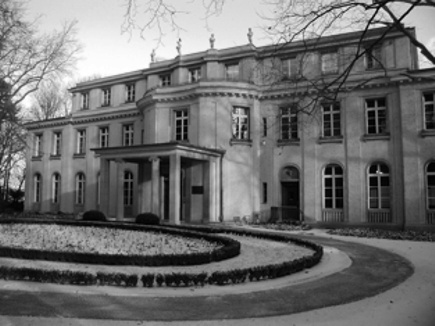
On the other hand, functionalist scholars argue that Nazi policies were not orderly and structured, and this disorganization was a partly a result of the Third Reich’s jumbled internal affairs. Functionalists also tend to emphasize clashing interests and power struggles between different loosely organized groups as contributing to the lack of a consistent and organized Nazi policy. They see Hitler as not an active leader in the making and implementing of policy. Functionalists do not question Hitler’s hatred for Jews, but his ability to plan a coordinated murder effort mainly by himself. They envision the transition to murderous policy as gradual implementation through improvisation, rather than a consistent strategy with strategic coordination from the Fuhrer. A major body of sources functionalists rely on are Nazi administrative documents that demonstrate how bureaucrats across Europe contributed to the Holocaust.
Below are overviews of three scholarly works, two functionalist and one intentionalist, that reflect these diverging perspectives on Nazi policies.
Examples of Scholarship
Raul Hilberg, in his book The Destruction of the European Jews, argues that the unraveling of Jewish rights and the transition to the Final Solution occurred in a series of steps, rather than being a consistent policy. On page 49, he outlines this argument:
At first sight the destruction of the Jews may have the appearance of an indivisible, monolithic, and impenetrable event. Upon closer observation it is revealed to be a process of sequential steps that were taken at the initiative of countless decision makers in a farflung bureaucratic machine.
He implies that various bureaucratic actors were involved in the destruction of the Jews or the Final Solution. This notion of multiple actors having power over Nazi policy aligns more closely with the functionalist camp. If his work were intentionalist, he would identify Hitler as a primary actor in the implementation of Nazi policy and the subsequent transition to genocidal tactics. Instead, Hilberg likens the Nazi trajectory to a multipronged bureaucratic machine, with the sequential implementation towards murderous policy occurring through “machinery of destruction.” This argument suggests that the Nazis were not consistently intent on committing mass murder, but that the Final Solution was just one drastic step of the “machinery” as it progressed over time.
Hans Mommsen takes a functionalist approach by questioning Hitler’s leadership. He suggests that the Nazi leader did not have a strong foundation over the implementation of policy and did not issue an order himself for the Final Solution. Rather than Hitler headlining a coordinated effort to murder the Jews, Mommsen argues that the genocidal policy arose from a fusion of Hitler’s fanaticism with the chaotic internal structures of the Nazi bureaucratic regime. Hitler had a clear hatred for Jews but was not involved in coordinating the details of the Final Solution. Mommsen implies that intense competition occurred within the National Socialist Party in that various underlings desired to please the leader’s brazen and directionless visions for Jewish destruction. His rhetoric was then translated by other bureaucrats into “murderous excesses.” Both Hilburg and Mommsen argue that Hitler was not the sole actor involved in the implementation of the Final Solution but differ in their explanations of the role the bureaucracy played in this process. Hilberg suggests that the machinery, while not set on murder, was fairly controlled, while Mommsen seems to indicate that loosely organized competition to please a fanatical Fuhrer led to the murder of Jews. While both are functionalists, they disagree about the extent Hitler was involved. Intentionalist historians envision Hitler’s role differently.
For example, Lucy Dawidowicz in her book, The War Against Jews: 1933-1945, argues that Hitler had a coordinated and organized vision for the murder of Jews, indicating that the outbreak of war was Hitler’s “arena” for implementing this genocidal policy. She insists that his plans were extensive and that the Final Solution was derived from his earlier antisemitic ideologies, dating back to 1919. At one point on page 158, Dawidowitz writes that “the grand design was in his head.” Hitler had specific goals in mind and ideas about how to destroy the Jews were at the center. This argument fits an intentionalist perspective because Dawidowicz contends that Hitler was the central figure in planning and implementing Nazi ideology, directing a coordinated effort to destroy the Jews. She connects the policy to Hitler’s own antisemitic views, noting how the wartime murderous policies were derived from statements Hitler made well before the war. In this perspective, Hitler was an active leader with consistent and organized policy goals to murder Jews.
Intentionalist/Functionalist Reading of a 1919 Letter by Adolf Hitler
Source: Adolf Hitler, “Hitler’s First Major Statement on Anti-Semitism: Reply to Adolf Gemlich (September 16, 1919),” letter, from German History in Documents and Images, Volume 6: Weimar Germany, 1918/19-1933, accessed September 3, 2020.
In these two HIS 234 student analyses below, one can see how classifying a source as absolutely intentionalist or functionalist can be difficult. These readings interpreted the same document in opposition to one another. The document was Hitler’s first public statement on antisemitism in 1919. In the document, Hitler details his vehement hatred for Jews and suggests that Germany should legalize antisemitic policy. He also calls for the “uncompromising removal of Jews.” This phrase in particular is evaluated differently by the two students.
Intentionalist Reading: Isabel Padalecki
…By presenting Jews as a group of inherently and biologically deficient beings, Hitler also extends his antisemitic, murderous ideals beyond the German context. He postulates that Jews in all political contexts are an inherently manipulative group that weaponizes public opinion to “[satisfy] a lust for money and domination.” In describing their harm as politically ubiquitous, Hitler constructs a logic in which antisemitism becomes a politics of resistance to the “Jewish threat,” and the commitment to “the uncompromising removal of the Jews altogether” becomes a measure of the strength and endurance of organized society itself. Concerning this threat, Hitler urges his student that this goal of removal is “only possible under a government of national strength,” linking the survival and strength of all nations in the world to their ability to eradicate Jews and suggesting that peaceful society and Jews cannot coexist.
Though he does not specifically mention death camps, the racialized, nationalist rhetoric through which Hitler presents Jews in 1919 creates a logic in which the problems that he ascribes to the pathogenic and foreign racial composition of Jews do not have any solution other than the eradication of the Jewish race through mass death. In this letter, Hitler mobilizes nationalist and eugenic ideologies to position Jews as the biological enemy of all states, implying that to prove strength and protect its rightful citizens, a state must eliminate Jews. That, in 1919, before World War II was even imagined, Hitler was calling for the “uncompromising removal” of Jews, language that implies a more extreme form of violence than emigration or deportation, discredits a functionalist reading that depicts the Holocaust as resulting from the tumultuous context of war and the disorganized nature of Nazi bureaucracy. Thus, this document supports an intentionalist interpretation of the Holocaust.
Functionalist Reading: Michael Krasuski
…Hitler advocated in his letter response for a “reason-based” antisemitism that had the goal of eliminating Jewish legal rights. In describing this concept, Hitler wrote that “antisemitism based on reason alone must lead to the systematic legal combating and removal of the rights of the Jew, which he alone of the foreigners living among us possesses.” This passage implied that he envisioned legal measures to target and remove Jewish people from German society rather than killing them. Hitler mentioned “rights” immediately following the word “removal,” indicating his support for enacting barriers to Jewish freedom. Assuming Hitler’s sentence was grammatically correct, and the word “legal” modified both “combatting” and “removal,” then removal likely referred to deportation, expulsion by law.
Scholars who are intentionalist may counter this point, arguing that “legal” did not modify the word “removal,” and that Hitler advocated here for permanent extermination. This is a reasonable contention; however, two other passages suggested that Hitler envisioned the answer to the “Jewish Question” as a multi-pronged process involving the participation of other leaders and the German people at large. These characteristics would also fall under a functionalist interpretation. Hitler noted that antisemitism was a collaborative effort when he said that “the rebirth will be set in motion… [by] the ruthless action of personalities with a capacity for natural leadership and an inner sense of responsibility.” He made use of a plural noun, “personalities,” when describing this process. This word choice implied that Hitler himself may not have full unilateral control over forming the stages of the antisemitism movement but that the opinions and perspectives of other leaders would be included as well. Furthermore, Hitler mentioned a possible role of the German public in this “renewal” of German spirit when he explained that “no mere change in the form of the State as such can alter or improve our position, but only the rebirth of the moral and spiritual energies of the nation.” This wording again suggested that antisemitism is a widescale nationwide effort, and Hitler appealed to nationalist principles to relate with Germans who despised the Jewish people. He wanted to repair what he saw as a morally degenerate nation, degraded by “greedy” Jews and their corrosive values.
Interested in more about Intentionalism and Functionalism? Check our list of sources at the bottom of the page.
The Bystander Question
The simple story of the Holocaust is one of the European Jews being savagely rounded up and systematically eliminated by the German Nazi Party. There is a clear victim and an obvious perpetrator when we discuss the Holocaust in such black and white terms. However, once we dive further into the nuances of this genocide, lines become harder to draw between who could be considered a victim of the Holocaust, who should be blamed for such a horrific event, and who just allowed it to happen. While there is no definitive answer, in order to more cohesively understand the ethnic mass murders that took place in Nazi Germany, we must be able to understand who the victims, perpetrators, and bystanders of these heinous systematic killings were.
The most easily defined category of those involved with the Holocaust would be that of the victim.
In Robert M. Ehrenreich and Tim Cole’s article “The Perpetrator-Bystander-Victim Constellation: Rethinking Genocidal Relationships,” they define a victim as “a mass that was constantly identifiable and exposed to the destruction process” (Ehrenreich, Cole 213). According to the authors, in order to be a victim, someone needed to be a member of an ethnic, religious, or other minority group (such as homosexual men or disabled people).
However, Ehrenreich and Cole go further, stating that it is necessary to separate the victim category into smaller sub-groups based on individuals’ experiences. For example, the experiences of an older Jewish woman and able-bodied Roma man, while both victims of the Third Reich, are completely different: one is sent straight to the gas chambers while the latter is put to hard menial labor. The victims of the Nazi party are the reason that it is important that we continue to study the Holocaust to this day, we owe it to them to keep their legacy of pain and suffering alive and prevent anything like this from happening again. However, it is also necessary that we condemn those who directly caused and carried out the orders of the Final Solution: the perpetrators.
Once we move past defining those who are considered victims of the Holocaust, categorizing who is a perpetrator and who is a bystander becomes more difficult. An obvious group to blame are members of the Schutzstaffel, more commonly known as the SS, who were tasked with much of the transportation, guarding, and executions of victims during the Holocaust, both at concentration camps as well as on the Eastern front. The Gestapo, the Nazi secret police in charge of identifying and rounding up those to be deported, also clearly constitutes what it means to be a perpetrator.
However, who else could be categorized as a perpetrator?
According to Raul Hilberg, author of The Jewish Catastrophe, a perpetrator is anyone who played a specific role in the formulation or implementation of policy, or aiding the implementation of policy, that is directly tied to the Holocaust. While this obviously condemns the Nazi high command to came up with the Final Solution, and the SS and Gestapo who directly implemented policy, this also denounces many other groups as participants of mass genocide. The Polish police, who aided the Einsatzgruppen in the summary executions of hundreds of thousands of Jews, do not have the ability to claim that they were forced to do so and should be held accountable as a result under Hilberg’s definition. German citizens or people who lived in Nazi conquered territories who surrendered Jews to the SS would also be considered perpetrators. Even though they did not directly take place in the killings, they “aided the implementation of policy”, meaning by helping the SS and collaborating against the Jews, they were directly responsible for what happens to them. That begs the question, what about those who stood by and allowed the Holocaust to take place right under their nose?
By far the most challenging aspect of the debate over who is to blame for the Holocaust falls at the feet of those who are considered bystanders.
Who qualifies as a bystander? Is it simply the people who lived in invaded countries? Does it include German citizens who were loyal to the nation, but did not participate in antisemitic practices? Could we identify those who documented the horrors of the Holocaust from afar as a means of defiance simply as bystanders, as they did not actively participate in violent resistance? Robert A. Goldberg, Professor of History at the University of Utah, defines a bystander in The Bystander During the Holocaust as:
…defined by their choice: they stood by and chose inert obedience and passivity over power and justice.
Goldberg, pg. 650
In other words, anyone who pledges allegiance to Nazi Germany or does nothing to resist is, in fact, a bystander.
However, each historian has his or her own definition of what it is to be a bystander, which has caused an incredibly divided debate over what it means to be someone who witnessed the Holocaust. Raya Cohen in her essay “The Lost Honor of Bystanders”, defends those who stood idly by during the Final Solution, contending that “the bystander has earned a distinction in Holocaust historiography: [they] now stand alongside the very perpetrators of their crimes and their victims… [but] the bystander can do nothing but keep returning to the tormenting memory of the moment.”
Since the bystander could do nothing, according to Cohen, they should not be condemned for the crimes of those taking an active part in the Holocaust. However, there were countless forms of resistance that could be taken against the Nazi perpetrators, anything from violent resistance to simply refusing to give up the hiding places of Jews. Anyone who is classified as a bystander actively chose to do nothing to aid those being persecuted and are squarely on the wrong side of history.
This hard definition of what a bystander is offers no leniency. This begs the question, what about those who witnessed the Holocaust from afar, taking no active resistance that posed any risk to themselves, but documented the atrocities committed by the perpetrators? A prime example would be Polish Journalist Kazimierz Sakowicz.

Sakowicz witnessed the Ponary Massacre, the worst mass execution – namely of Jews, Poles, and Russians – in Lithuania during the war, carried out by the Einsatzgruppen and their Lithuanian collaborators. While he did nothing to stop the killings or help those that were being executed, taking no form of active resistance, his journal was published as the Ponary Diary, and is one of the only first-person accounts of the largest Lithuanian massacre to ever take place. This makes Sakowicz a passive resistor. While he did nothing to actively intervene, he cannot be categorized as simply a bystander. There is a grey area between who commits acts of passive resistance against the Nazi party, and who truly is a bystander. This grey area is what causes much of the aforementioned debate over who should be considered a bystander and who is not.
While a bystander certainly is not castigated nearly as much as a perpetrator of mass genocide, there is still clearly blood on their hands. A bystander, knowing fully what was happening to the Jews and other oppressed groups, allowed for these inhumane actions to take place without attempting to stop it in any way. It is important for us to examine and remember these three participants – or non-participants in the case of the bystander – for that is what keeps the legacy of the victims alive and condemns the actions or passivity of the perpetrators and bystanders. The millions of bystanders throughout Nazi Germany and Eastern Europe helped make it possible for perpetrators to massacre eleven million people in the Holocaust.
For Further Reading
On Intentionalism & Functionalism
Intentionalist Scholars:
- Dawidowicz, Lucy. The War Against Jews: 1933-1945. New York: Reinholt & Winston, 1975.
- Fleming, Gerald. Hitler and The Final Solution. Berkeley: University of California Press, 1984.
- Jackel, Eberhard. Hitler’s World View: A Blueprint for Power. Cambridge: Harvard University Press, 1981.
Functionalist Scholars:
- Browning, Christopher. Fateful Months: Essays on the Final Solution. Teaneck: Holmes & Meier, 1985.
- Hilberg, Raul. Destruction of the European Jews. New Haven: Yale University Press, 2003.
- Krausnick, Helmut and Martin Broszat. Anatomy of the SS State. New York: Walker, 1968.
- Mommsen’s work was originally in German and was never translated to English so it is not cited directly here. See this chapter here for more information on Mommsen and other scholars referenced: Marrus, Michael, Holocaust in History (London: Weidenfeld & Nicholson, 1988), 31-51.
On Perpetrators, Bystanders and Victims
Scholarly works:
- Browning, Christopher R. Ordinary Men: Reserve Police Battalion 101 and the Final Solution in Poland. New York: Harper Perennial, 1998.
- Cesarani, David and Paul Levine. Bystanders to the Holocaust: A Re-Evaluation. London: Taylor & Francis Group, 2002.
- Cohen, Raya. “The Lost Honour of Bystanders? The Case of Jewish Emissaries in Switzerland.” The Journal of Holocaust Education 9 (2000): 146 – 170.
- Ehrenreich, Robert M., and Tim Cole. “The Perpetrator-Bystander-Victim Constellation: Rethinking Genocidal Relationships.” Human Organization, vol. 64, no. 3, 2005, pp. 213–224.
- Goldberg, Robert A. (2017) “The Bystander During the Holocaust,” Utah Law Review. Vol. 2017 : No. 4 , Article 2
- Hilberg, Raul. Perpetrators, Victims, Bystanders: The Jewish Catastrophe, 1933-1945. New York, NY : Aaron Asher Books, 1992.
- Lewy, Guenter. Perpetrators: The World of the Holocaust Killers. Oxford University Press, 2017.
Primary Sources:
- Klemperer, Victor, 1881-1960. I Will Bear Witness: a Diary of the Nazi Years 1933-1941. New York: Modern Library, 1999.
- Ringelblum, Emanuel. Notes from the Warsaw Ghetto: The Journal of Emmanuel Ringelblum. Schocken Books, 1974.
- Sakowicz, Kazimierz. Ponary Diary, 1941-1943: A Bystander’s Account of a Mass Murder. Edited by Yitzhak Arad, Yale University Press, 2005.
